BOOKS OF 2024

I’m not one for giving book recommendations. That might seem contradictory, given that I’m writing a reading round-up. Instead, I prefer to drop author quotes into conversations when (I believe) they’re relevant—even if it’s a stretch. To me, that’s different from a recommendation.

Some say a book can’t save you. Sure, that’s a lot of pressure. But connection can, and I hope everyone knows what that feels like. Let me show you the evidence of a book that has stayed with me. I hope that’s a connection you can trust.

(ChatGPT tells me a central theme of my 2024 reading adventure is the power of reflection and choice. That does sound better than the way some of my friends put it: “Oh, more heavy topics.” Let’s go with something like “meaningful connections.” I do appreciate the tidy nature of a theme, but that’s only part of the story. The details matter.)

The best books of 2024 (and the details that stay with me):

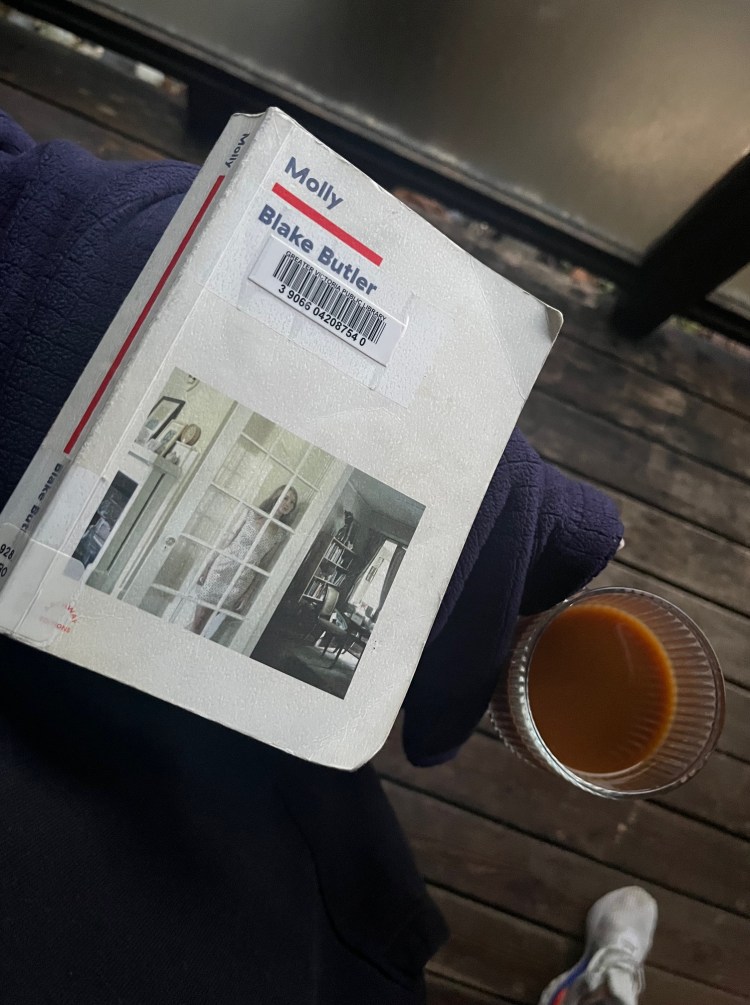
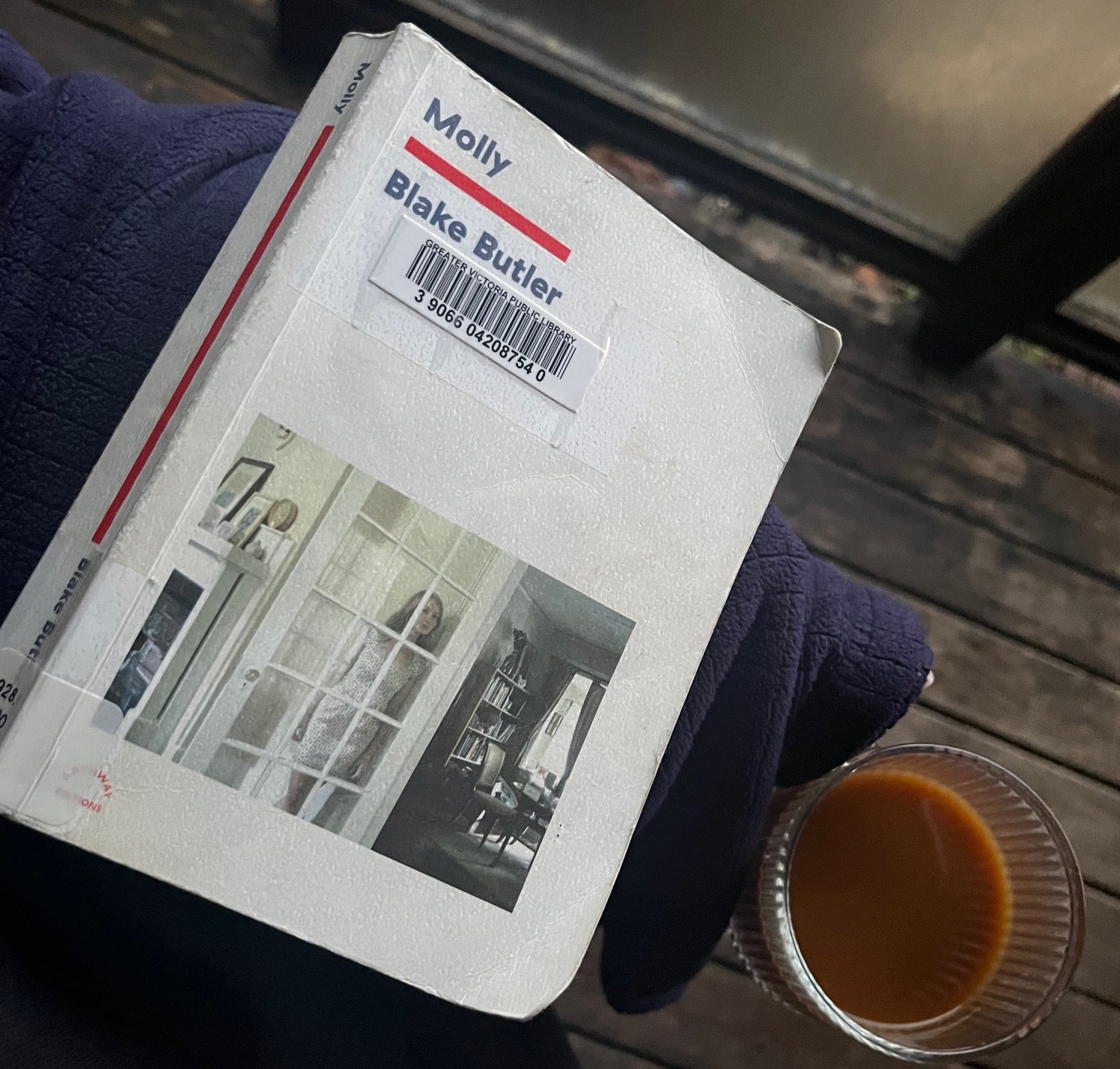
Molly by Blake Butler

“No matter what I might have said, they tell me, it wouldn’t have changed anything, and even if it does feel sort of dramatic to imagine somewhere to begin, though my gut has an idea: When I used to say it was all going to be okay, Molly, all I really meant is that I love you.”

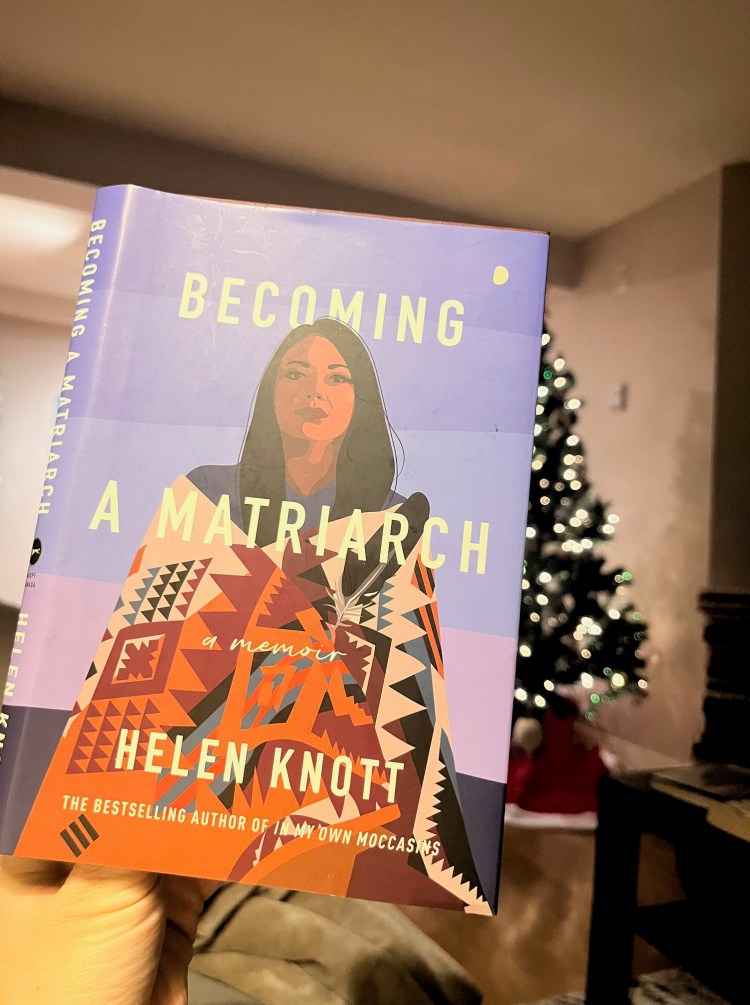
Becoming A Matriarch by Helen Knott

“It is likely the same hope Mama had when she asked me, “Why don’t you write about the good times? Why do you have to focus on all the bad?”
I told her that I needed to sort out the heavy memories because they blocked my ability to reach for the good ones.
It was as if I was searching for pearls hidden in a bush full of blood-drawing thorns. I had to heal and move the wounding parts before I could grasp the precious pieces.
I’m here now, Mama. I made it to the clearing.”

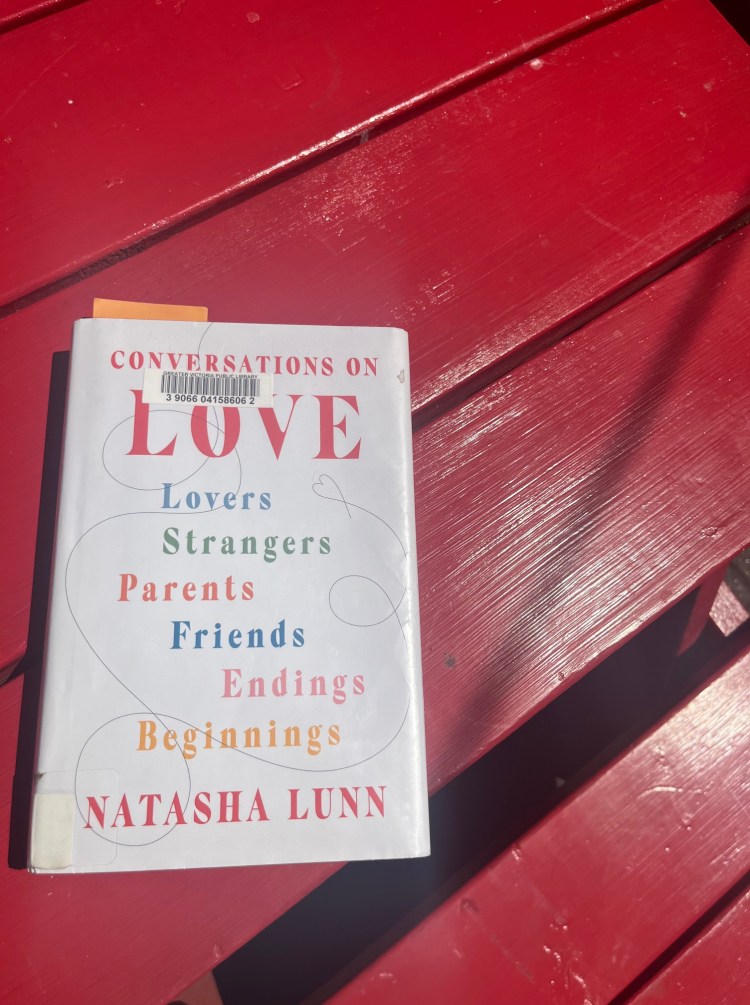
Conversations on Love by Natasha Lunn

“I hope that on my last day on earth I’ll look back on it all and think, love is astonishing, life is astonishing. How grateful I am, not only to have known love, but to have known just how important it was, to pay attention to it.”

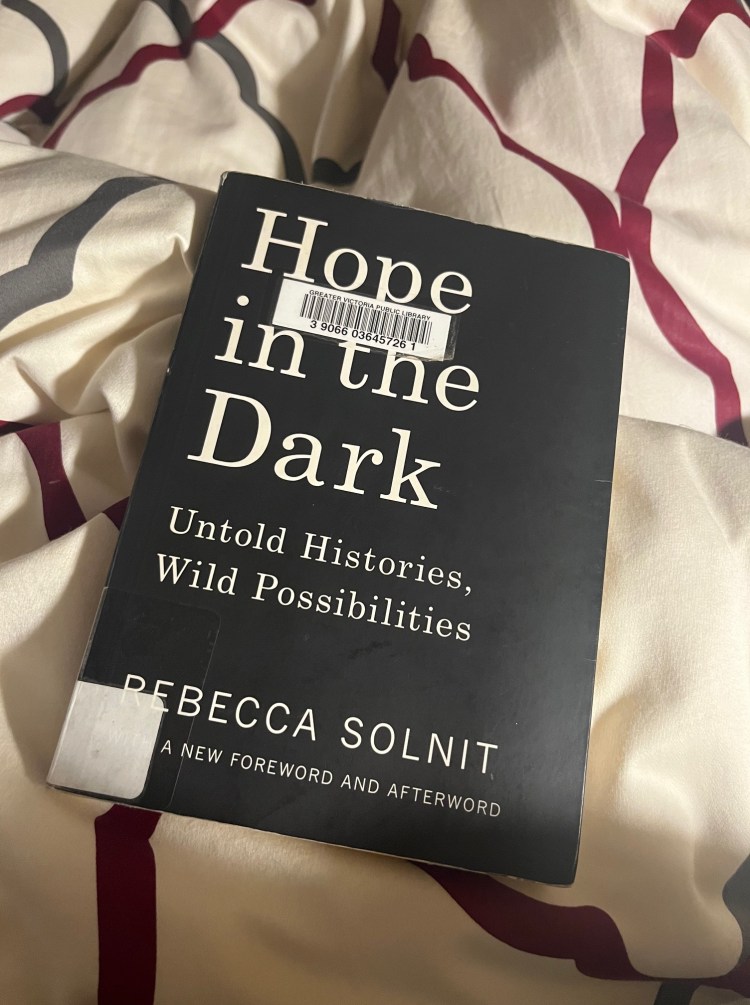
Hope in the Dark: Untold Histories, Wild Possibilities by Rebecca Solnit

“To recognize the momentousness of what has happened is to apprehend what might happen. Inside the word emergency is emerge; from an emergency new things come forth. The old certainties are crumbling fast, but danger and possibility are sisters.

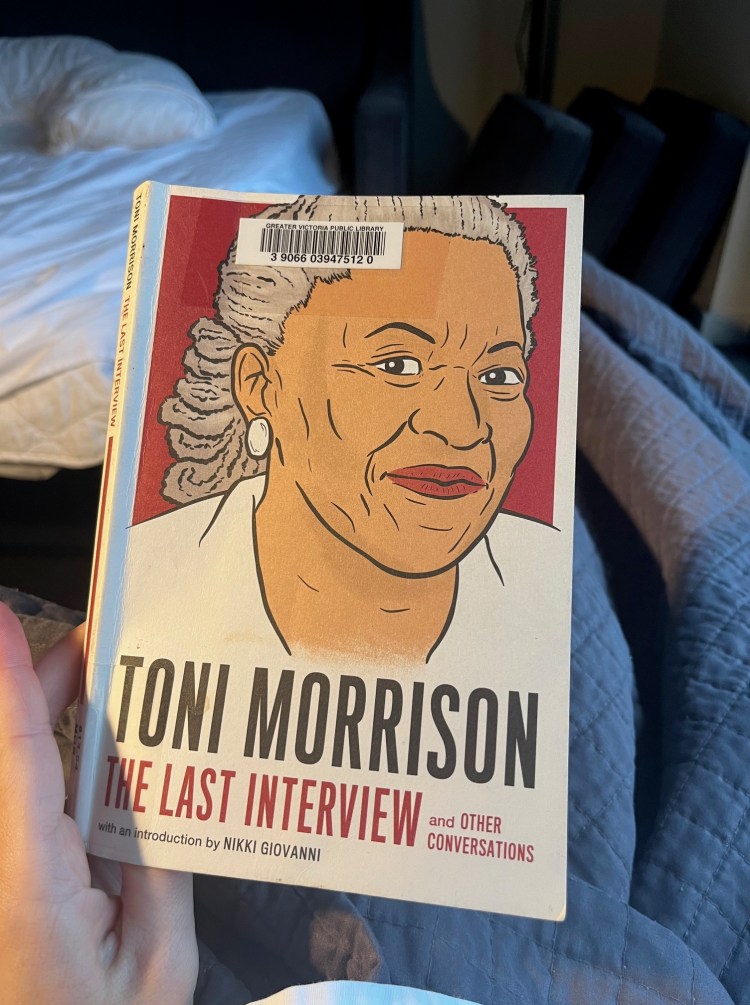
Toni Morrison: The Last Interview

ELKANN: But why with pencil?
MORRISON: Because if you wrote with ink it sounded a little arrogant. Pencil sounded like you knew what you were doing but you were willing to erase.
ELKANN: You wrote many books, right?
MORRISON: Um-hmm. About eight, I think. Some I would like to do over. One I would like to do over.
ELKANN: Which one?
MORRISON: The Bluest Eye. The first book. I know more now. I’m smarter.

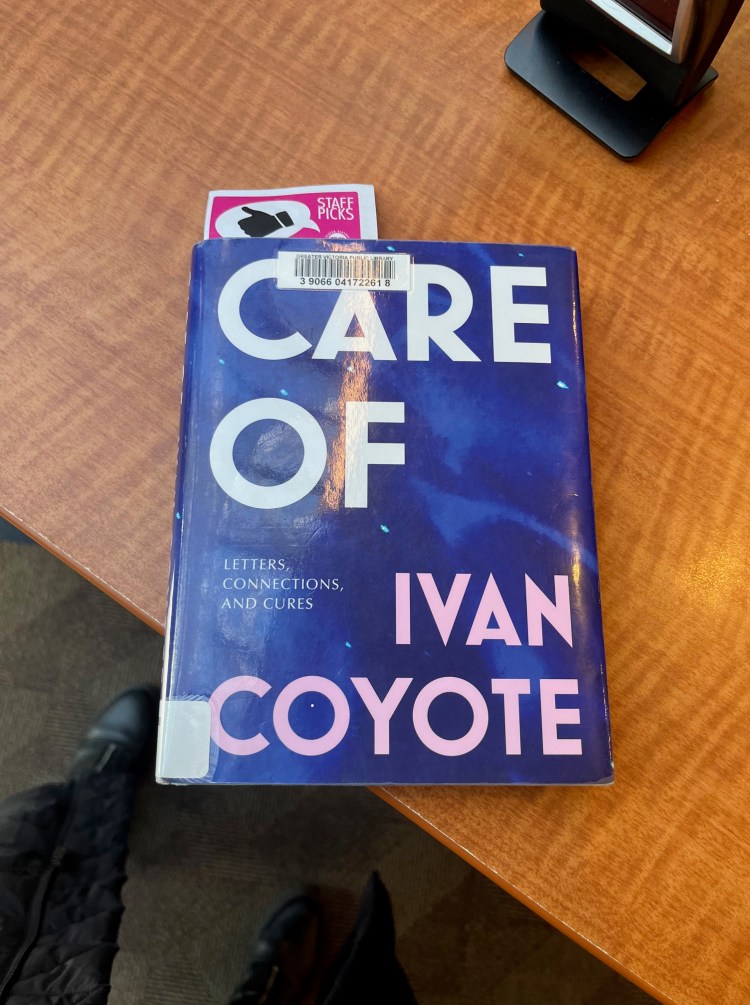
Care Of by Ivan Coyote

“So. Ayesha, my butch sister. I hope you get up in the morning and greet your naked self with nothing but love, and know that no matter what clothes you wear out the door and in front of that camera, that I can see exactly who you are, and I know that the truth of us both is found in the spaces between words and labels, not inside of the words themselves.
This is why labels peel off in the water.”

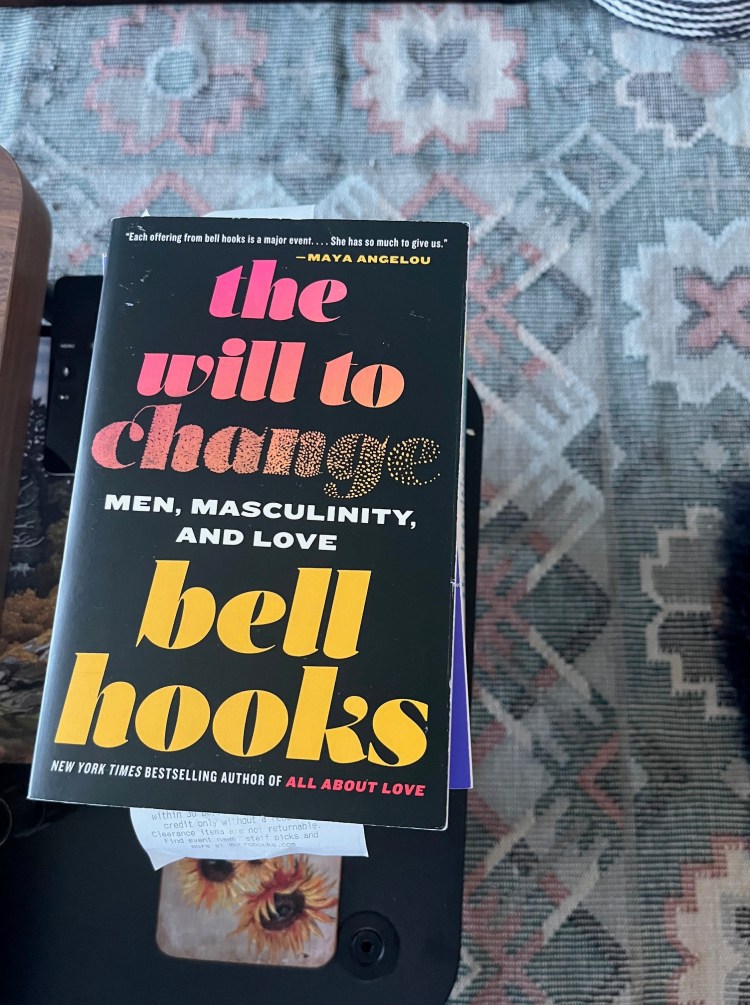
The Will to Change by bell hooks

I am responsible for accepting or choosing the values by which I live. If I live by values I have accepted or adopted passively and unthinkingly, it is easy to imagine that they are just “my nature,” just “who I am,” and to avoid recognizing that choice is involved. If I am willing to recognize that choices and decisions are crucial when values are adopted, then I can take a fresh look at my values, question them, and if necessary revise them. Again, it is taking responsibility that sets me free.

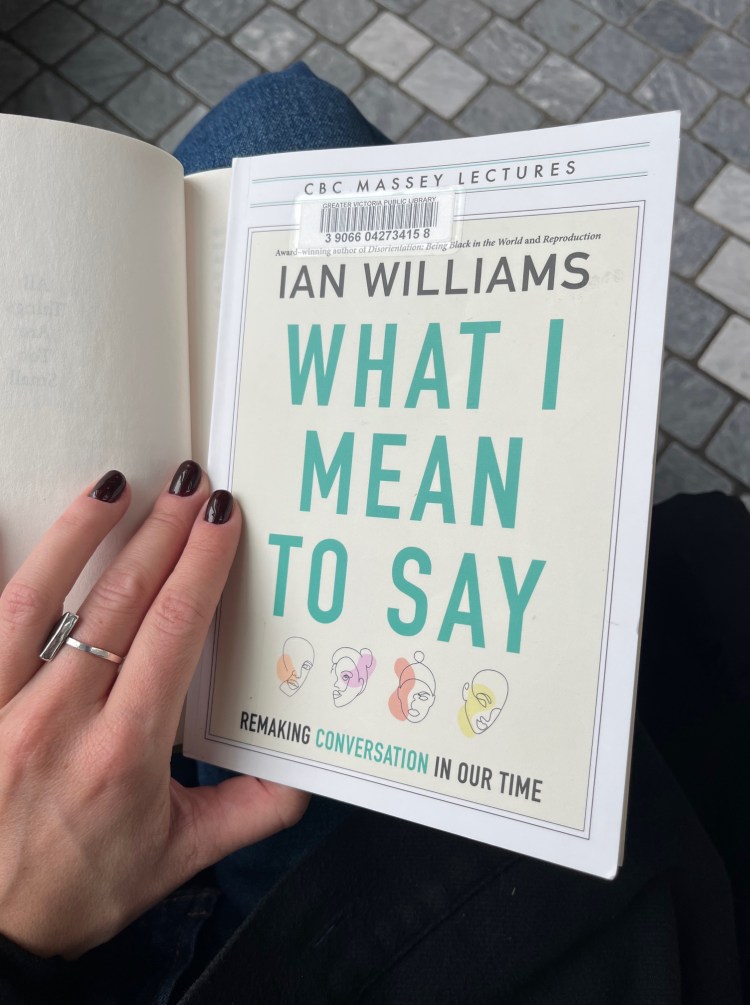
What I Mean To Say by Ian Williams

“He explains bogeys and birdies and eagles better than anyone I’ve ever met until I can’t help myself, I think, Yes, I will play golf with this man. Then we’re talking about mafias again. Italians originated it, he says.
There was organized crime before the Italian mafia, I say. It’s almost midnight. Now we’re talking about pear trees and whether mine has flowered.
As we near the hotel he lights a cigarette, moves his hands back and forth between our chests.
This, he says.
What? I say.

This, talking to you. This is better than sex.

FIND ME IN WHITEGATE

Across the pub a man slips off his barstool. His steps are soft as he inches closer. He heard me ask the bartender about the Copithorne name. “Copithorne, you say? You’re asking about the Copithornes?”

The deep wrinkles on his face almost hide his gentle eyes. He’s never left this 20-house town, I think, and that brings a sense of home. “Some in the graveyard,” he continues. “Yes, they’re in the graveyard.” He’s nodding as he steps back to the safety of his barstool. “Mrs. Solon lives in their house. She’ll be home. Go knock on Mrs. Solon’s door. She’s a nice lady.”

From the pub Mrs. Solon’s home is a straight walk down the main street. She opens her door quickly, too quickly I think, as she turns to lead the way to her kitchen. Rural living brings that kind of trust.

We sit at her table to drink tea and eat crackers with cheese. She’s had a life in this house, she says, by raising nine children and saying goodbye to her husband years ago when God called him first. She lives with Parkinson’s now and her daughter made this head-wrap she’s wearing to keep her warmer on days like this. If she’s going to be in a picture she’ll get her wig from the bedroom, she insists.

She talks about the Copithornes and calls them “your people” as she remembers the Protestant family, my family, who lived in her home many years ago. “I knew we were the first Catholic family in this home,” she says. “Here,” she continues as she stands and shuffles to the cabinet. “This is from your people.” She’s holding a Canadian-themed teddy bear.

My people aren’t just in the graveyard here. My people are still memories here.

As our visit comes to an end, I ask for her address. “Teresa Solon, Whitegate, County Clare,” she answers quickly, too quickly, so I push for more details: A house number? A postal code?

“Oh no,” Mrs. Solon shakes her head. “They’ll find me.” Right, I think, ask the man in the pub.

LOVE IN COUNTY CLARE

Now it’s the reflection of the streetlights on the dark, rain-soaked road of Lisdoonvarna that come to mind from that first night. There’s also the calming feeling from the silence before the faint notes of the festival’s band float by us.

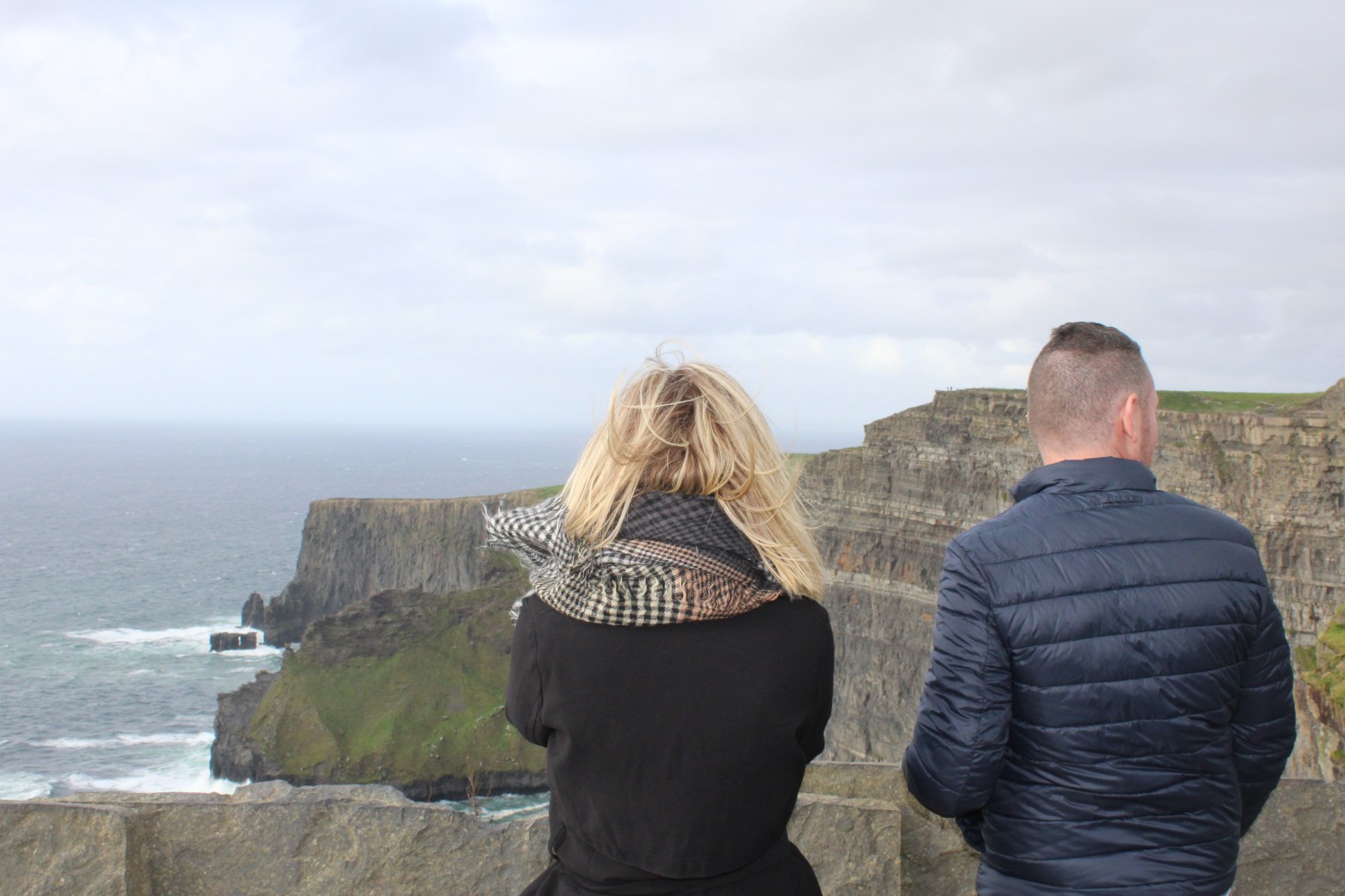
Kirsten is walking beside me on our way to the pub. We’ve been on this Irish road trip for days, from Dublin to Belfast and along the west coast to County Clare, never stopping for more than a night. We debated going out tonight. We wondered if the handsome pub owner from earlier that afternoon would even notice our absence if we stayed in the comfort of our B&B. We had a drink to help us decide and then we had another. Then we went out.

Three figures walk towards us on the dark road. Kieran O’Halloran, that handsome pub owner, comes into focus with an older couple behind him. “Hold on,” he says when he sees us. “Let me deal with this and we’ll go back to the pub.” The older couple had used the wrong parking lot that day, we’ll soon learn from Kieran, and as a result their car was trapped. Moments before our encounter, Kieran had left the pub to walk home, assuming us Canadians made other plans. “It was almost 10:00 p.m. and I know Canadians never start a night that late,” he’d explain with a laugh. An employee had to run after him: Kieran was the only one with the key to release the trapped car. He was forced to turn around to rescue the car.

Now Kirsten will say she fell for him on the dance floor that night. She did actually fall, like a bowling bowl took her out at the knees. We think a man bumped into her, but none of us can confirm that detail. Still, it feels significant to mention.

Kirsten howls with laughter as she brushed the dust off and finds the floor beneath her feet again. I watch her continue to fall, fall for the handsome pub owner who dances with her, talks with her and instantly cares for her. I watch her let guards down, the same ones I’ve watched stop her in the past.

We stayed in County Clare for three days to fall for so many details of the seaside community. Now it’s nice to know a love story in Ireland is so far from a cliché.

THE BOOTS

I cried about the boots last night. I was back in this city for a couple hours when the memory came for me—like it hunted me to haunt me. I know the high of my distractions must come with the suffocating undertow of grief. This time it was the boots.

The memory finds Nick well enough to walk, only less hair under his baseball hat to show any sign of cancer’s grip. We walk into Citizen Clothing on Lower Johnson Street because he wants to show me the boots. “Here they are,” he smiles as he holds the smooth brown leather in his hands. “I love them,” I reply. “Try them on.”

I sense him hesitate. Nick does not have a problem spending money. I’m the sibling who lectures about budgets. His reaction confuses me, so I push, “Just try them on.” And eventually he wiggles his feet into the boots. “I love them,” I confirm again as he returns from a stroll down the aisle.

He’s silent as he takes them off. “Nick, what’s wrong? You have the money. Buy them.” His deep voice softens as he explains, “I know, Linds. I just don’t want to buy anything until I know I’m not going into the hospital again.”

Because I don’t know what to say, because I love him and want so much more for him, I panic beg. “Please don’t think like that. If you want them, buy them. Please don’t live like this.” He says he’ll think about it, and we leave the store.

We’re only a couple steps down the sidewalk when he turns to go back for the boots. I still remember that look on his face, with the shopping bag in his hand, and the energy in him. “You’re right, Linds,” he says. “I can’t keep thinking about the next hospital stay.”

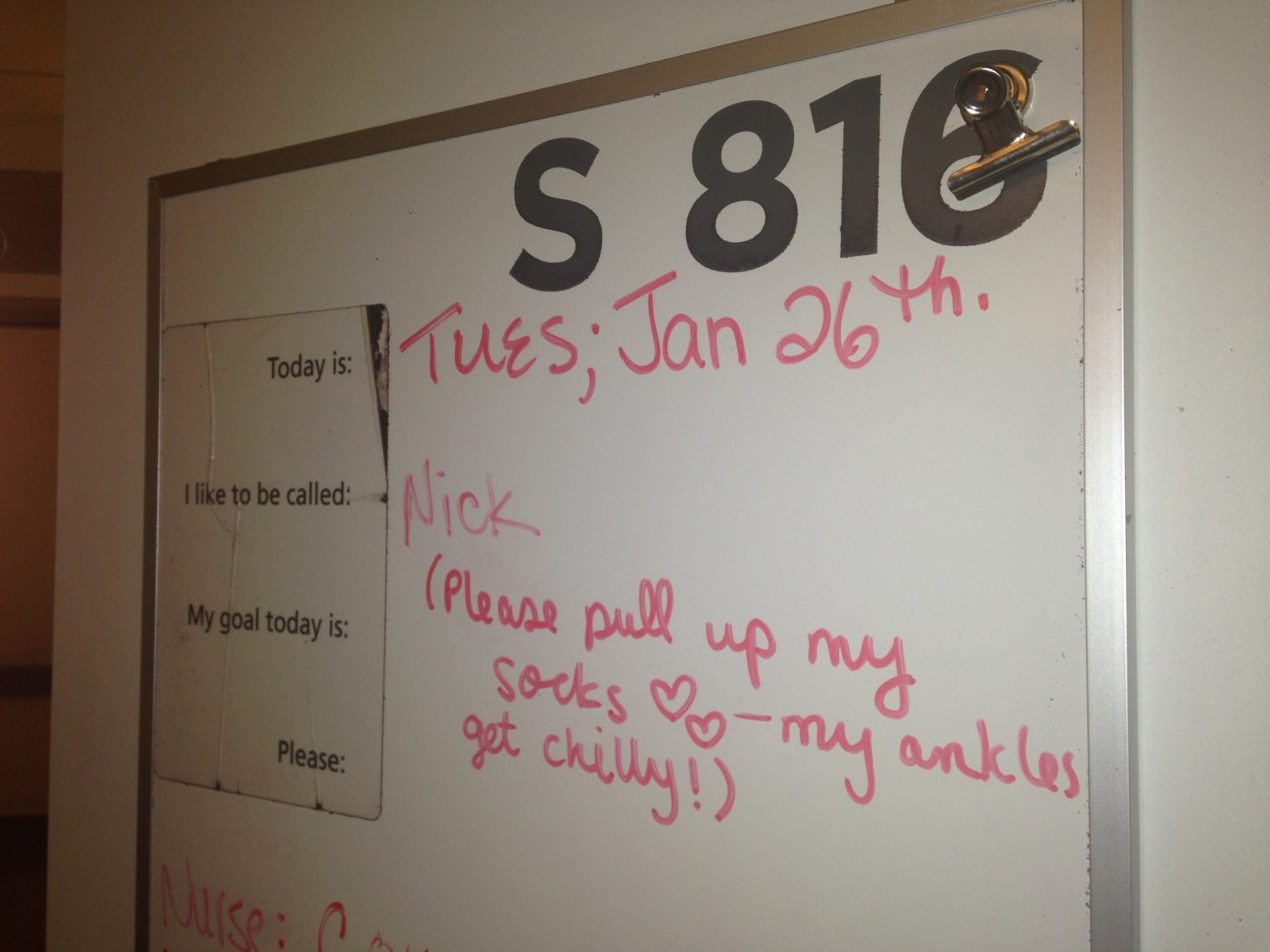
And less than 24 hours later, his text to me reads: “Good thing I tried those boots on when I did. My ankles swelled up yesterday afternoon & since then I haven’t been able to fit them on my feet! Hahaha”

He would never wear the boots again. The swelling would never go down. His body would never recover. He died three months later in the hospital surrounded by our family and his friends.

As for the boots, they sit high on a shelf in our parents’ home above his ashes as a stunning reminder that even in the darkest days of this life, there is choice. Even if it is fleeting, even if it’s small, even if pain is coming, keep choosing happiness. I’m begging.

LEGENDS CORNER

We had one meal that day. After 15 hours for this overnight mission, we sat by the river and split a pizza between the two of us, staring at strangers getting drunk or high from a cough syrup shaped bottle. I could hear the music pouring from the doorways on Broadway — thick and sweet and potent. We picked up the pace and headed for a door.

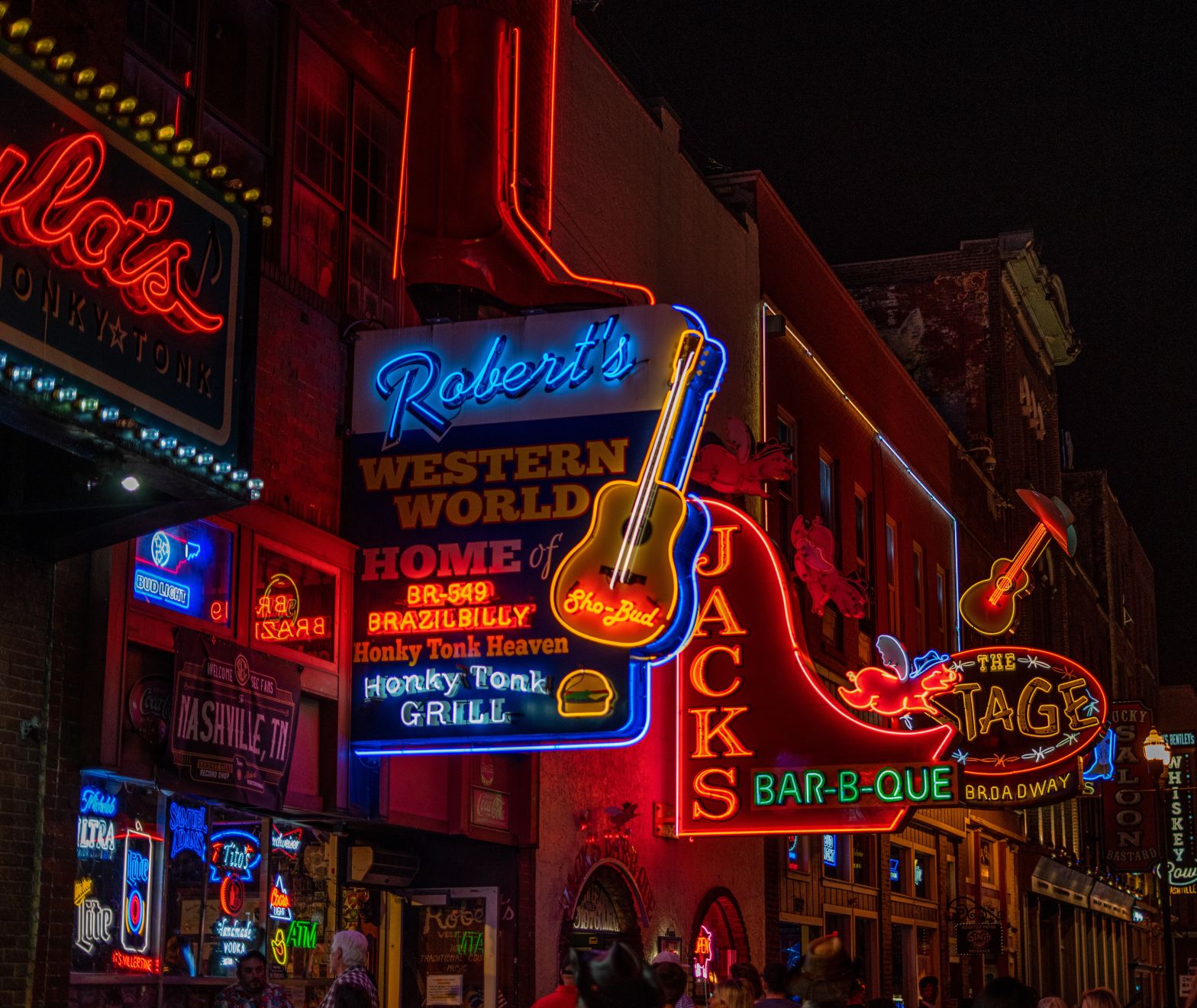
We thought it was Tootsie’s Orchid Lounge. A legendary spot in Nashville, we wanted to experience something or anything there — excitement, inspiration, bigger shots. The stories of the greats coming off the Grand Ole Opry oak floor and crawling into Tootsie’s for an encore performance and encore drinks captivated us. (And when we did visit, I swore the smell of beer and rebellion would haunt those walls and me forever.) But Tootsie’s isn’t the stage for this story. We had mistakenly walked into Legends Corner. By most standards, it’s a trap complete with the begging neon signage. On that night, the only empty bar stool felt more like home.

I watched as couples claimed the floor as their own stage. If the high-class were swaying with the blue-collar, no one knew. The band played with stadium talent and delivered with the intimacy of backyard barbecue session. Like the southern version of Springsteen pulled up a chair and asked what song y’all wanted to hear while passing the corn. For a song or a night, there was a sense of belonging to this raw world.

We had dusted off the grit of the city while discovering honky-tonk glamor. It was real here — talent, stories, people, hustle. It was an office where those labeled “emotional” were rewarded, where tears were strength and rejection just as common as the whiskey. Here you could count on the crowd’s review in crumpled bills at the bottom of the tip bucket.

Time passed, drinks came and went down and I drifted in and out of lyrics and thoughts when the music abruptly stopped. Every head turned as the rocker cowboy announced he “don’t want to sing that no more”. I caught myself thinking: I’ve never been this happy. Like a wave of emotion that comes when you’re blindsided by a surprise party and every loved one is welcoming you home, it was wild and overwhelming. It was the first time I’d known this happiness or perhaps the first time I recognized it as a real thing.

Blame it on the beer or lack of food, but there’s nothing quite like a night that creeps up on you. Even if that it comes in a neon-signed tourist trap, I’d wander through that door again.


The above piece made the shortlist for World Nomads & The Lonely Planet’s 2015 Travel Writing Scholarship